Intergenerational trauma in the black community
From sundown towns to the whooping debate lets explore how intergenerational trauma shapes Black culture, behavior, and identity without us even realizing it.
4/30/20266 min read
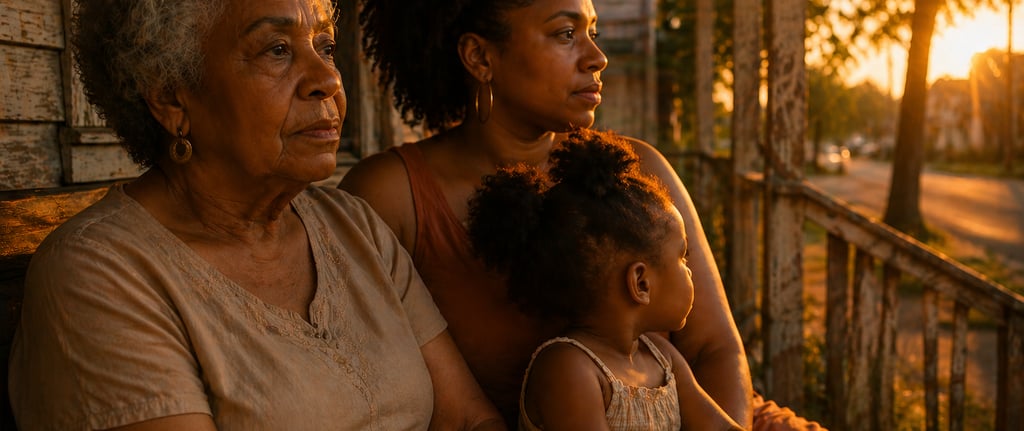
If you are an elderly millennial or older then you remember the notion of being home before the streetlights come on. By the first flicker your mom or granny was on the porch waiting for you with a little concern and a little anger. How did the streetlights become such a part of our culture and dictate our curfew?
Whether we realize it or not we are all carriers of trauma. We are not only walking around with our own lived experiences but also those of our ancestors. This is inherited trauma often referred to as intergenerational trauma — trauma passed from one trauma survivor to their descendants (Very Well Mind). Part of me knew about the behavioral side of passing trauma down but I did not know it can be passed biologically as well.


How is trauma passed biologically? Epigenetics. Epigenetics refers to how your behaviors and environment can cause changes that affect the way your genes work (CDC). An example of this is a study completed in 2015 with Holocaust survivors and their offspring who did not experience the Holocaust. They found the survivors had an epigenetic gene change related to stress — and the same change was found in their offspring (EBSCO). Now think about that from a Black person’s perspective. Starting with slavery down to the current climate of racial injustice, this influences us to this current day. The way we move, act, talk, feel — that little knot you always carry around — that could all be tied to our ancestors passing on their trauma genetically.
There was a study done by Dr. Joy DeGruy over the course of 12 years. So, you know there must be some depth to this. She worked on a theory she titled Post Traumatic Slave Syndrome (PTSS), which discusses the residual impacts of generations of slavery. It is described as “a condition that exists when a population has experienced multigenerational trauma resulting in centuries of slavery and continues to experience oppression and institutionalized racism today. Added to this condition is a belief — real or imagined — that the benefits of the society in which they live are not accessible to them” (Dr. Joy DeGruy, Post Traumatic Slave Syndrome). She goes on to name behavioral patterns we exhibit as symptoms of PTSS. One of them is Vacant Esteem. Simply put, it means we determine our worth based on society’s beliefs about us. We develop an internal ceiling that tells us this is as good as it gets. We don’t dare to dream. Today it looks like people laughing at you because you dream big or have a dream that doesn’t fit the narrative. That is trauma passed down through generations.
We know trauma can be passed down through genes and we know slavery lasted well over two centuries — that is a lot of traumas now flowing through our bodies. And it didn’t stop there. We also went through Jim Crow and segregation, and up to now we are very much still attacked because of the color of our skin. Imagine how that shows up in our lives and in the rules, we live by. What does this look like in everyday life?
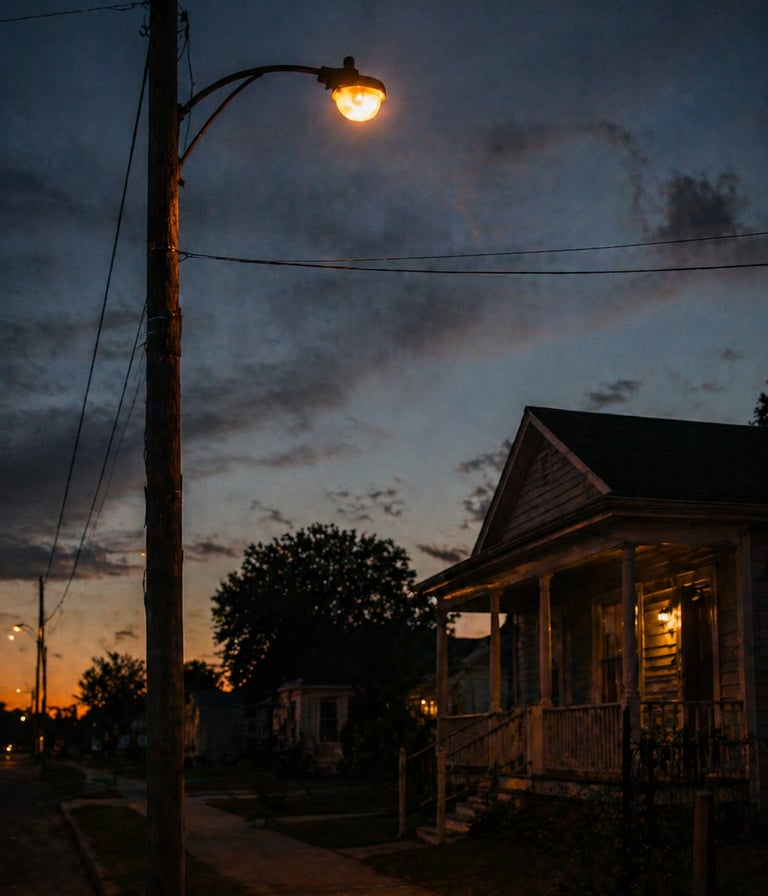
I’m an elderly millennial. I grew up with no cell phones — to find your friends you rode your bike until you found the house with all the other bikes outside. We kept change in our pockets for pay phones and we had to be home before the streetlights came on. At the time we thought it was just a rule and didn’t think too much about it, but looking deeper it has trauma built into it that we never noticed. Our parents probably didn’t notice either. After slavery we weren’t safe — we still aren’t, but that’s another conversation — and even though we were technically free, we still weren’t treated fairly and there were very real dangers that came with being Black. One of them was living near a sundown town. What is a sundown town, you ask? It was an all-white municipality that excluded non-white people through intimidation tactics. But let’s be real — they used violence, hence the name sundown. If you were caught out after sunset your life was in danger. So, looking back, when we were told to be home before the streetlights came on, that was fear wrapped up as protection.
You all are going to come for me for this next example, but whoopings are another example of trauma being passed down. I know many believe it is how we control our kids, how we keep them in line. What if I told you that prior to us being dragged here, physical punishment was never the way? I know this requires a little history but the context matters. We know about the transatlantic slave trade — many of those people came from West Africa and Central Africa. Prior to the slave trade, physical discipline was not part of the culture. They regarded children as sacred. There is one caveat: parts of Central Africa were already subject to colonization by European nations and had adopted their forms of discipline, including physical punishment. Physical punishment was introduced to us by European societies. They used it as a tool to control us, keep us in line, and they even convinced us it was for our own good. Does any of this sound familiar? From there, enslaved ancestors began beating their children to protect them from what “massa” would do. During Jim Crow, they beat them to protect them from white violence. Fast forward to today and we believe we must hit our kids to keep them in line and out of prison. And I know the saying — “spare the rod, spoil the child” — but it is not literal. Yes, a rod is a stick, but the scripture is not telling you to beat your child. It is telling you to discipline them, be firm, and do it with love. Please do not confuse discipline with punishment.
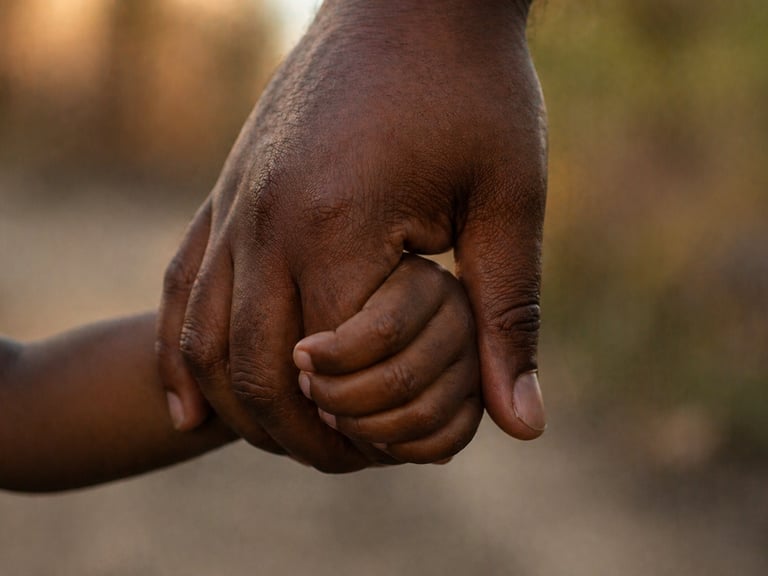
These are just some examples of how trauma is passed down. The behavior becomes culture and we continue it because it is all we know. We walk around carrying something we never chose and often cannot name. Society constantly reminds us we are not safe and that opportunities are far and few between. And we are not only carrying the weight of our ancestors — we are accumulating our own. It looks a little different, but it still shapes our behavior and the way we see the world. In my own experience, there was a guy I was serious about. Then one day he told me he had a baby on the way. It hurt. I was gut punched. And that pain quietly trickled into everything after it. There was another guy — someone I really loved and wanted to be with — but I sabotaged it because of my own unhealed wounds. After that first experience, I carried a fear that any man I loved would eventually hurt me the same way. So as protection I never went all in, even when I wanted to. That is a trauma response. It does not look like war or violence, but it is real. There were people who grew up with food scarce on the table and now they overbuy groceries to make sure that feeling never comes back. There are people who never received the love they needed as children and now they show up closed and guarded in every relationship. Trauma does not have to be catastrophic to be real. It just must leave a mark.
I understand how heavy carrying all of this can be. We are in a constant struggle to feel peace in a world that has caused us so much pain. But we do not have to accept this as our final state. Change begins with awareness — you cannot put down what you do not know you are carrying. That little voice that whispers this isn’t normal, this isn’t right — trust it. We can make changes, but it starts from within. Knowledge is our power. Therapy is our power. Honest and unmasked conversations are our power. So, tell me — what is one rule you grew up with that may have been rooted in trauma you never personally experienced?